
The Myth of the 'Blank Slate': Why Lived Experience is a Coach’s Superpower (and When Mentoring is the Missing Link).
We’ve all seen the stereotype of the traditional coach. You know the one: the "neutral observer" who sits back, tilts their head, and responds to your deepest professional crises with a well-timed, "And how does that make you feel?" or "What do you think you should do?"
Now, don’t get me wrong. Those questions have their place. In fact, they are the bread and butter of "pure" coaching. But let’s be honest: sometimes, when you’re navigating a corporate merger, facing a board-room mutiny, or trying to scale a business in a volatile market, the last thing you need is a mirror. Sometimes, you need a map. Or at the very least, someone who has actually walked the terrain before.
In the world of professional development, there is a long-standing debate about the "blank slate." Traditionalists argue that a coach should be a tabula rasa: a clean slate with no prior knowledge or experience in the client’s field: to avoid bias. My view? I think that’s a bit of a myth. More than that, I think it’s a missed opportunity.
At One Feather Coaching, I believe that lived experience is a coach’s superpower. While the core of coaching is about allowing the coachee to find their own solutions, today’s high-pressure environment requires a more sophisticated, hybrid approach. It’s about knowing when to coach, when to mentor, and how to blend the two for maximum impact.
The Problem with the 'Pure' Coaching Dogma
The traditional coaching model is built on the premise that the client has all the answers within them. The coach is simply the facilitator: the person who asks the right questions to unlock that inner wisdom.
It’s a beautiful sentiment. And in many cases, it’s true. If you’re exploring your personal values or trying to figure out why you procrastinate, a "pure" coaching approach is fantastic. But here’s the rub: in the fast-paced world of leadership, the "blank slate" can often feel like a "empty room."
Imagine you’re a first-time CEO struggling with investor relations. You hire a coach who has never spent a day in a corporate environment. They ask you brilliant, open-ended questions. But they don't understand the nuance of a term sheet, the pressure of a quarterly earnings call, or the specific loneliness of being the person where the buck stops.
Without lived experience, the coach lacks the context to ask the right questions. They might be asking you about your feelings when they should be helping you see the strategic blind spot that’s about to trip you up.

Why Lived Experience Changes the Game
When a coach has "been there and done that," the dynamic of the relationship shifts instantly. It’s not about the coach telling the client what to do (that’s a different pitfall we’ll discuss in a moment); it’s about relatability, empathy, and efficiency.
Shared Language: Lived experience provides a shorthand. You don’t have to spend forty minutes explaining the cultural nuances of your industry because your coach already "gets" it. This allows you to dive deeper, faster.
Increased Trust: It’s easier to be vulnerable with someone who you know has faced similar fires. When I talk to leaders about the leadership gap in facilities management, they know I’m not speaking from a textbook; I’m speaking from the trenches.
Contextual Questioning: A coach with experience knows where the "bodies are buried." They can ask questions that challenge your assumptions because they know what those assumptions usually look like in your specific role.
Coaching vs. Mentoring: The Great Divide (That Shouldn’t Exist)
Traditionalists like to keep coaching and mentoring in separate, neatly labelled boxes.
Coaching is non-directive. You ask; you don't tell. You facilitate; you don't advise.
Mentoring is directive. You share wisdom; you give advice; you guide based on your own journey.

In theory, the distinction is clear. In practice? It’s often a hindrance to progress.
The most impactful coaches I know don’t strictly adhere to one or the other. Instead, they operate in the "sweet spot" between the two. They understand that while the coachee should be the one "solutionising," there are moments when a lack of knowledge or experience acts as a ceiling. If the coachee doesn’t know what they don’t know, no amount of questioning will magically produce the answer.
The Hybrid Approach: The Art of the Pivot
This is where the magic happens. A hybrid approach involves a conscious, transparent shift between coaching and mentoring modes.
Think of it like this: Coaching is helping you find the map within yourself. Mentoring is pointing out where the tigers are hidden on the path ahead.
The most experienced coaches have a high level of "Situational Intelligence." They can feel the energy in the room (or the Zoom call) and know exactly when to pivot.
When to Coach: When the client needs to build confidence, explore their own leadership style, solve a relational conflict, or work on their Emotional Intelligence (EQ).
When to Mentor: When there is a specific skills gap, when the client is facing a "black swan" event they’ve never seen before, or when they are stuck in a loop of "I don't know" because they lack the necessary framework to move forward.
The key is permission. A great hybrid coach will say, "I’m going to step out of my coaching shoes for a moment and put on my mentor hat. In my experience of similar situations, X usually happens. How does that land with you?"
By doing this, you aren't taking away the coachee's autonomy. You are providing them with more data points so they can make a more informed decision. You are still allowing them to solutionise, but you're giving them better tools to do it with.
The F.E.A.T.H.E.R. Framework in Action
At One Feather Coaching, we don’t just talk about this; we embed it into our process. Our F.E.A.T.H.E.R. model is designed to be fluid, allowing us to meet leaders exactly where they are.
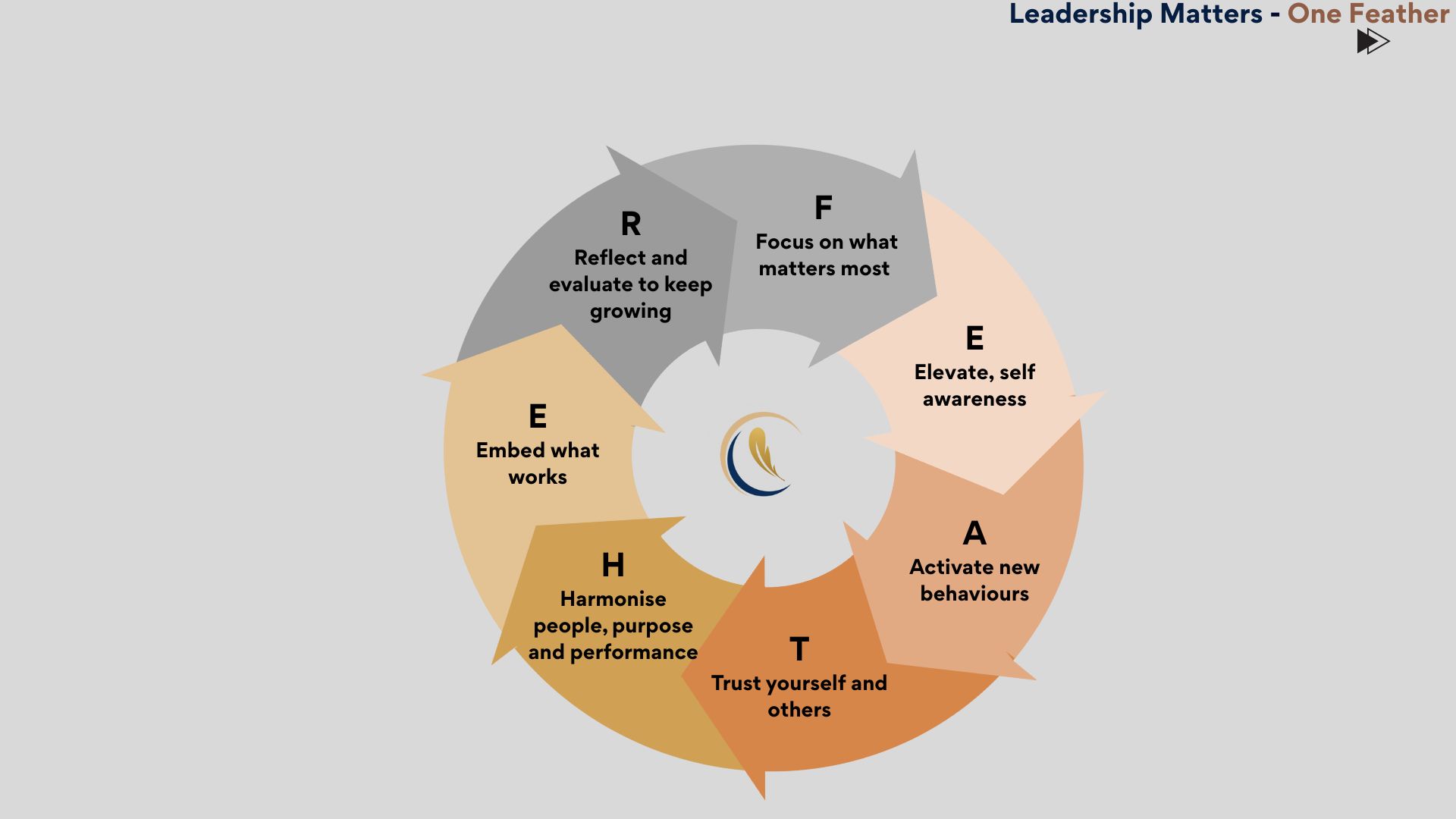
Focus on what matters most: We start with the coaching lens to identify the real issues.
Elevate self-awareness: Again, coaching.
Activate new behaviours: This is often where a bit of mentoring comes in: sharing "what works" to help activate those changes.
Trust yourself and others: Building the confidence to lead.
Harmonise people, purpose, and performance: The strategic "big picture" where lived experience is vital.
Embed what works: Creating sustainable habits.
Reflect and evaluate: Constant growth.
Why Organisations Need Hybrid Coaches Now
The world isn't getting any simpler. Leaders today are expected to be empathetic, tech-savvy, strategic, and resilient, all while navigating a global landscape that changes by the hour.
In this environment, "pure" coaching can sometimes feel too slow. Conversely, "pure" mentoring can feel too prescriptive and fail to build the leader's own "muscle."
The hybrid model is the future of coaching for organisations. It respects the individual’s potential (coaching) while valuing hard-won wisdom (mentoring). It’s efficient, it’s human, and it’s incredibly effective. It’s about investing in leadership in a way that actually moves the needle.
Finding Your Own Balance
If you are a leader looking for support, or if you are a coach looking to evolve your practice, I encourage you to embrace the "And."
You can be a facilitator and an expert.
You can ask powerful questions and share relevant stories.
You can hold space and provide direction.
Don't be afraid of your lived experience. Your scars, your wins, and your "I’ll never do that again" moments are some of the most valuable assets you bring to the table. Don't let a traditionalist tell you to leave them at the door.
Final Thought:
The best coaching isn’t about being a blank slate; it’s about being a bridge. It’s the bridge between where a leader is and where they need to be, built on a foundation of both psychological safety and practical wisdom. When we stop trying to separate the "coach" from the "human with experience," we create a much more powerful catalyst for change.
Curious about how a hybrid approach could transform your leadership journey? Whether you’re looking for executive coaching or looking to reset your team's culture, we’d love to chat. Reach out to us here to start the conversation.

